Sold
The Ferland Sword
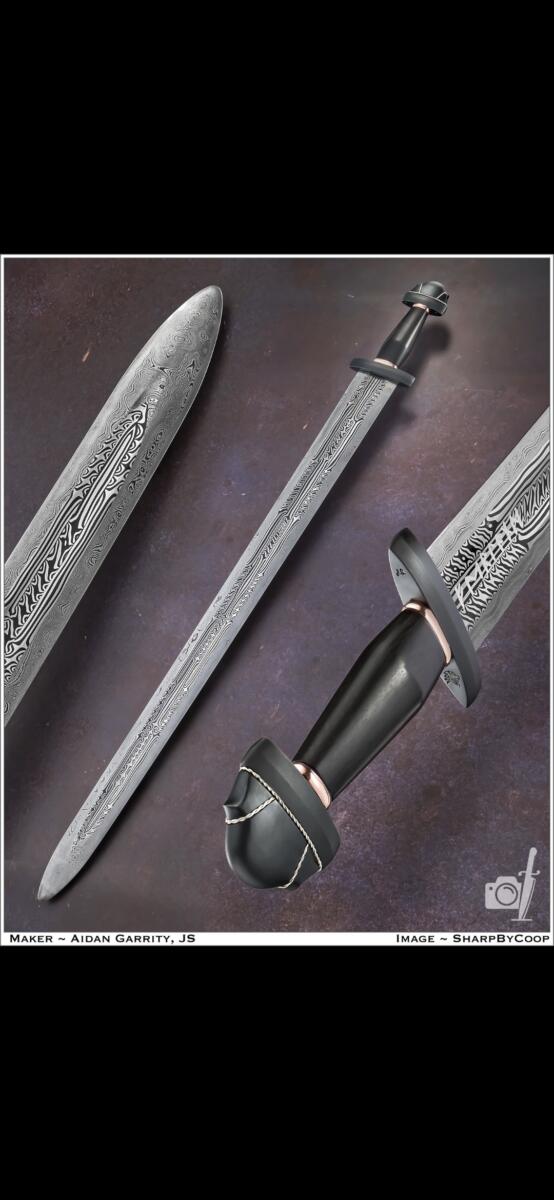
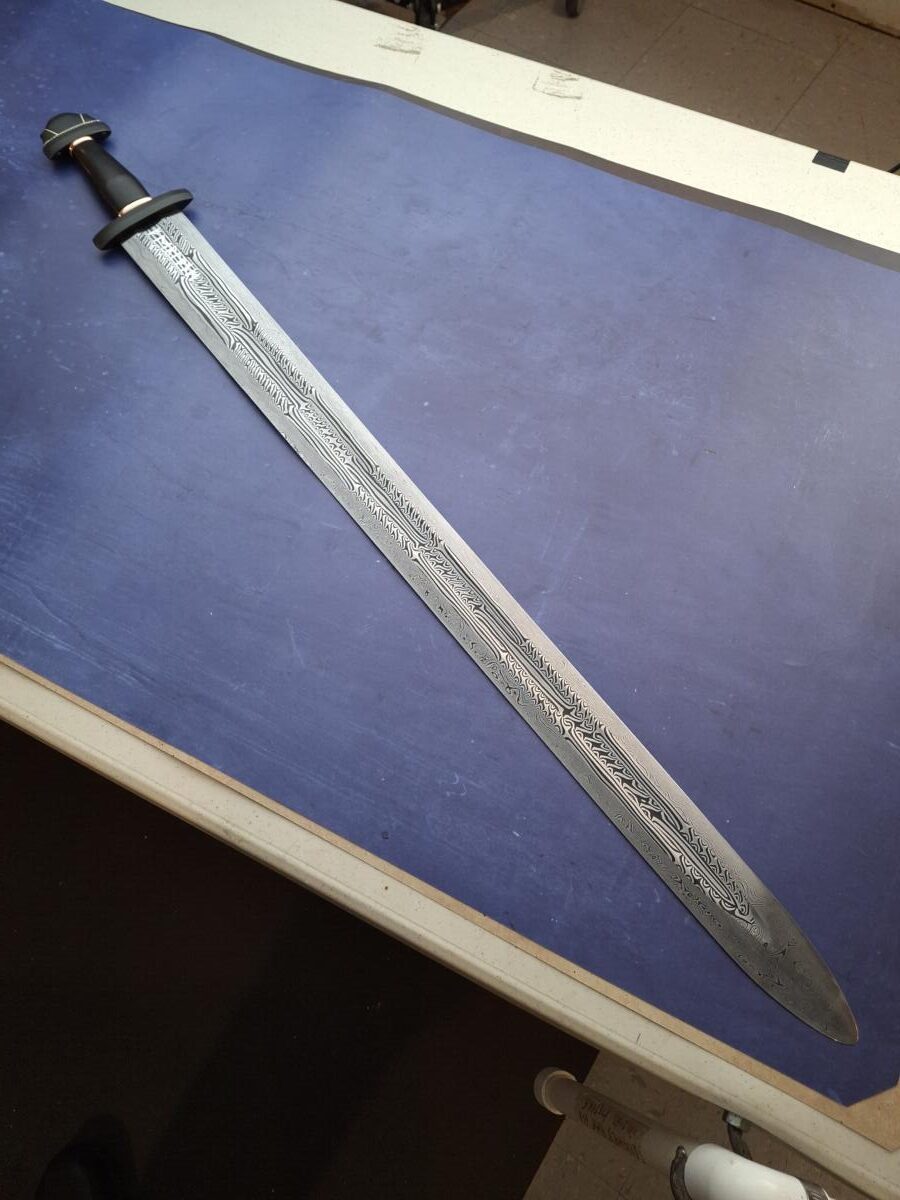
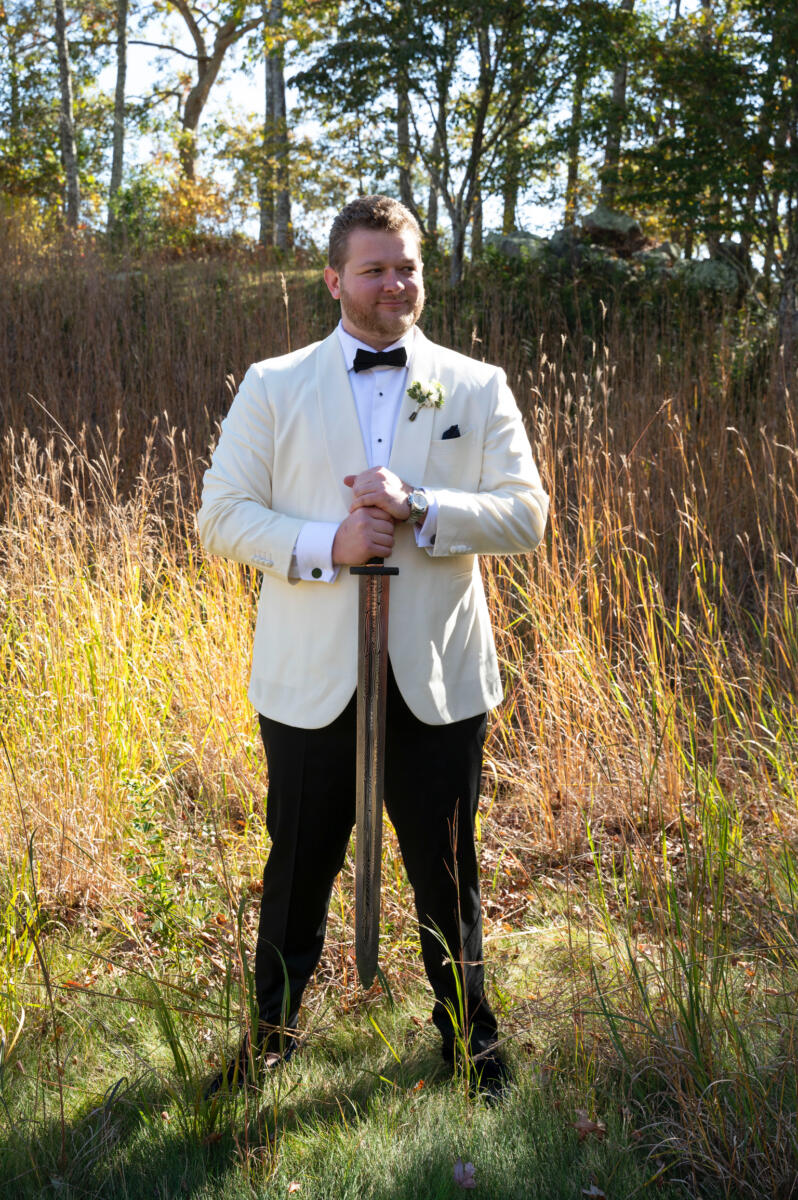
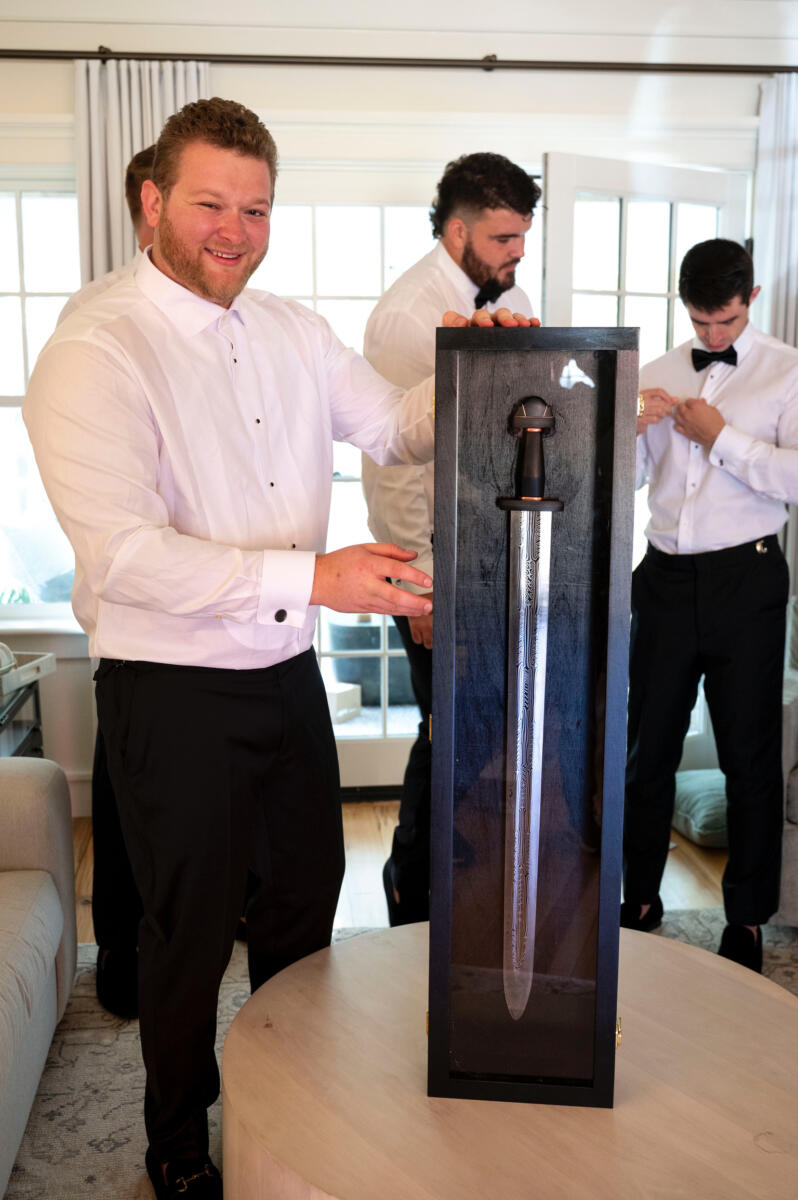
This regal sword represents the finest of blades being made in 10th century Sweden
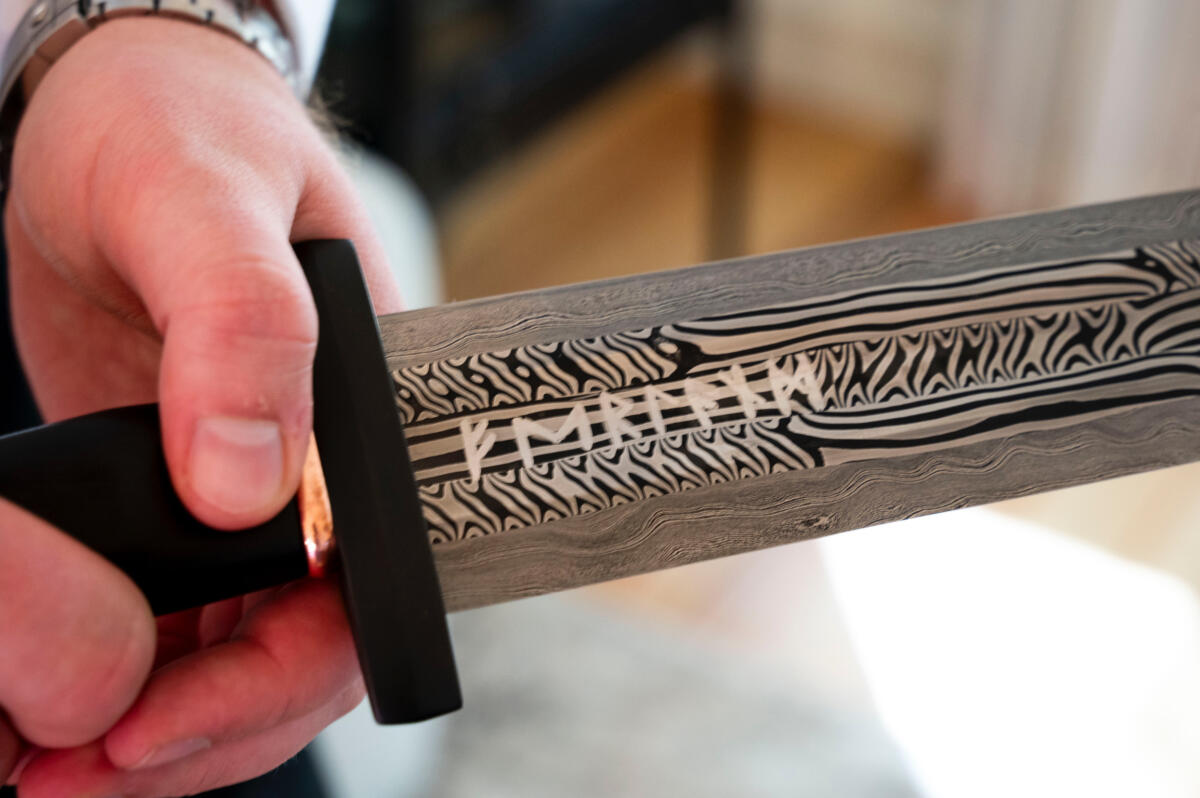
The 31 inch multibar blade is made in the style of northern European pattern welding. The process involves multiple bars of straight laminate pattern welded steel that are intermittently twisted to form sections of distinct star-like x-es that stagger up the blade. The core of three twisted bars is then wrapped with a high layer edge bar consisting of at least 600 layers of alternating low allow and high nickel steels
Historically, this process was not purely aesthetic, but a matter of incredible early medieval materiel sciences. The different layers were typically alternating pieces of high carbon and phosphoric iron, as well as low carbon alloys. The heavy layering on the edge was a method to spread the carbon of the higher content layers through a process called carbon diffusion, resulting in a more consistent carbon content throughout, providing more consistent hardness and performance. The phosphoric iron provided the ‘bright’ steel in multibar patterns, with some becoming extraordinarily complex.
The profile and proportions of the sword were heavily inspired by the original found by a reindeer hunter in Lesja, a remote region of Norway. Due to the frigid environment, its functionally an arctic desert, and the dryness beautifully preserved the sword.
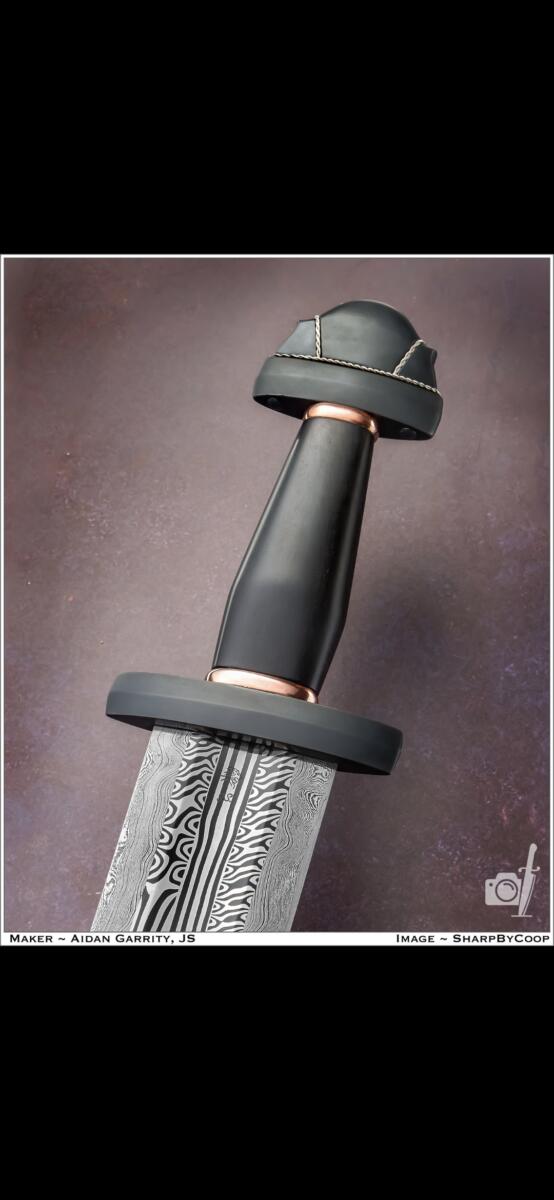
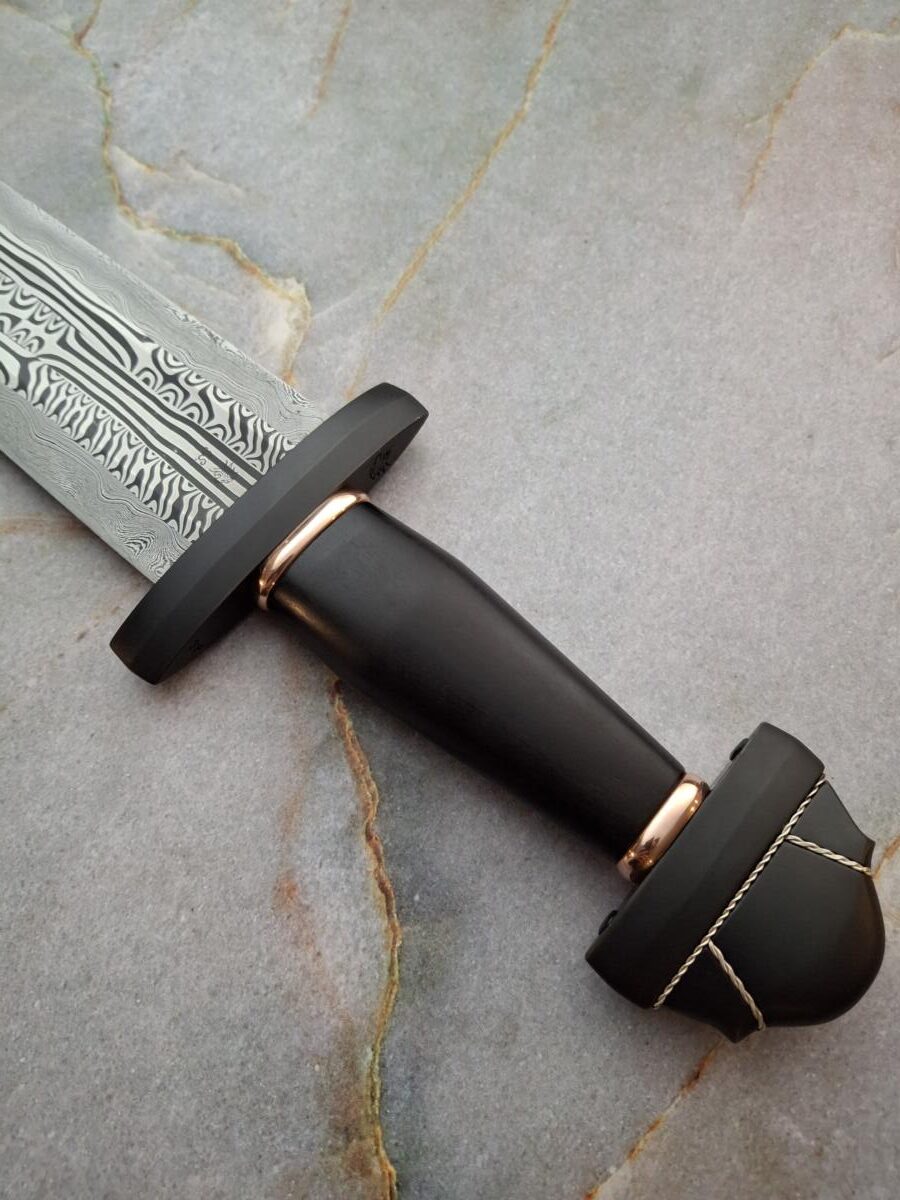
My fittings are far more austere than what many high end swords of the time had, frequently embellished with detailed engravings and inlayed precious metals and stones. I put my focus on accentuating the blade, keeping the fittings to blued steel with twisted fine silver wire and polished copper spacers. The grip is a simply shaped piece of 8000 year old bog oak
The owner’s name is resist etched into the fuller, written in elder fulthark runes
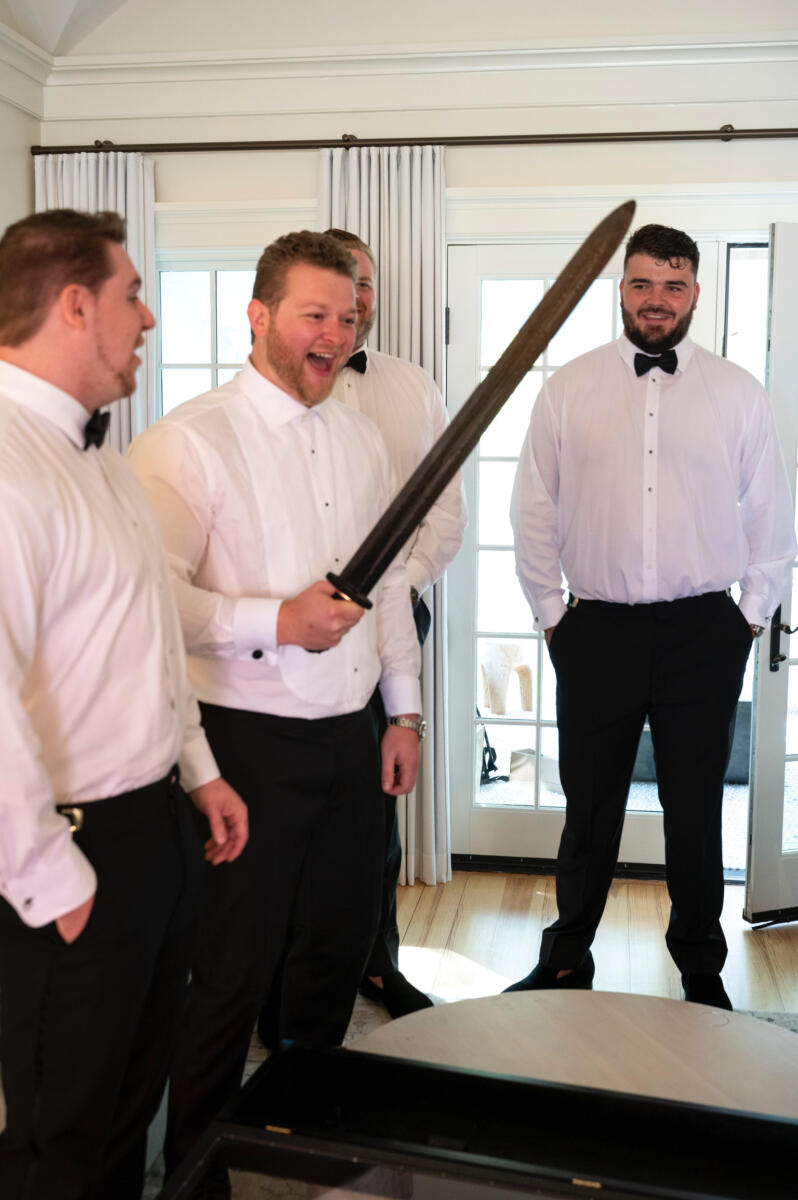
This represents a larger sword of the time, with a 31 inch blade and a fairly standard point of balance 6.2 inches from the lower guard
Shipping insurance is included on all US orders.
For international orders, please reach out via the Contact Page.